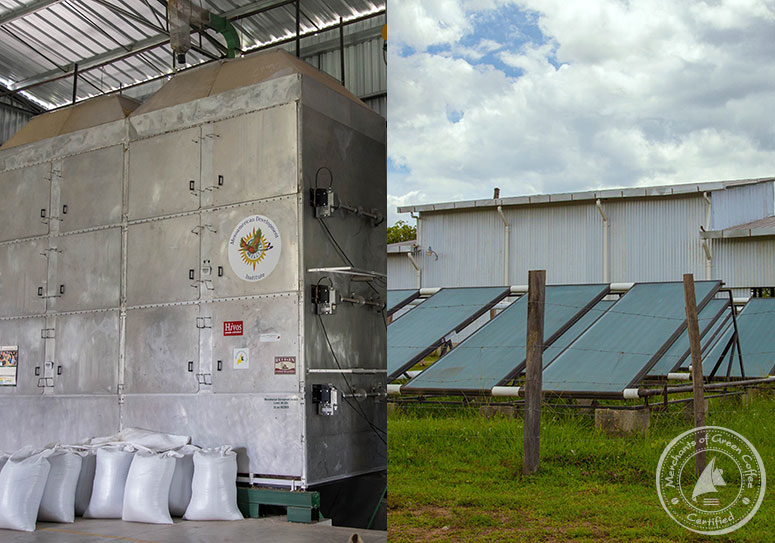
Cafe Solar® is the first restorative green coffee supply. Designed to address and provide solutions to coffee’s negative social and environmental issues, Cafe Solar® represents a proven model for sustainable coffee production. Its program is fully scalable and can be easily replicated in order to grow the coffee’s positive impact (a.k.a. produce more sustainable coffee).
The three main pillars of the restorative Cafe Solar® supply chain are:
Solar-Powered Coffee Processing. (The first solar-dried coffee! Replaces conventional wood-burning coffee processing).
Restorative Farming. (Integrated Open Canopy™: a system of farming that directly contributes to the protection and restoration of the natural forests surrounding the coffee farms).
Women Managers. (Women are key drivers in measuring and addressing the social and environmental issues).
Source: Information collected and summarized by Merchants of Green Coffee Inc. For more information, please see our Cafe Solar® page.
Meeting of Advisory Committee to Complete Legal Request to Establish the Corridor
This Yoro Biological Corridor Meeting Report marks a historical point in the Corridor’s development, as it finalized the legal framework to implement the progressive model of regional and interconnected sustainable development. Main objective(s) of the meeting included:
The legal submission of the YBC was completed on December 22, 2021 (a.k.a. the legal documentation under the forestry law for creating biological corridors). This was the final requirement in a 4-year process for Mesoamerican Development Institute (MDI) to submit to the Honduran government for the legal establishment of the Yoro Corridor. The advisory board is made up of experts in their fields and submitted to ACTA.
Meeting Details
Who: Coffee producers, members of the Honduran Network of Private Natural Reserves (REHNAP), members of the College of Forestry Engineers, Merchants of Green Coffee, and MDI field researchers and international students. What: Meeting to complete the final legal documentation to request the legal establishment of the Corridor. Where: Online on Zoom meeting platform. When: Wednesday, December 22, 2021 @ 2:00pm EST Why: To legally request the establishment of the Corridor in order to promote investments in biodiversity, sustainable development and forest restoration. (MDI is currently co-managing two national parks within the Corridor).
Conclusion & Next Steps
The legal documentation for the YBC was filed with El Instituto de Conservación Forestal (ICF) on the final week of 2021 by the Mesoamerican Development Institute, Honduras.
As Co-Managers of two national parks—Pico Pijol and Montaña de Yoro National Parks, MDI was invited (at a follow-up meeting on Friday, January 7, 2022) to meet with the incoming administration to discuss Co-Management, and also introduce the Yoro Biological Corridors Initiative to the new representatives of the Xiomara Castro Administration. We’ve been instructed on how to send our Yoro Biological Corridor proposal directly to the incoming president. We will be following up, asking them to move quickly on establishing the Corridor and to provide any No-Objection Letter that may be required for the international development banks and Green Climate Fund with which we are currently engaged. MDI will be submitting the “YBC package” to the new president by Friday, January 14, 2022.
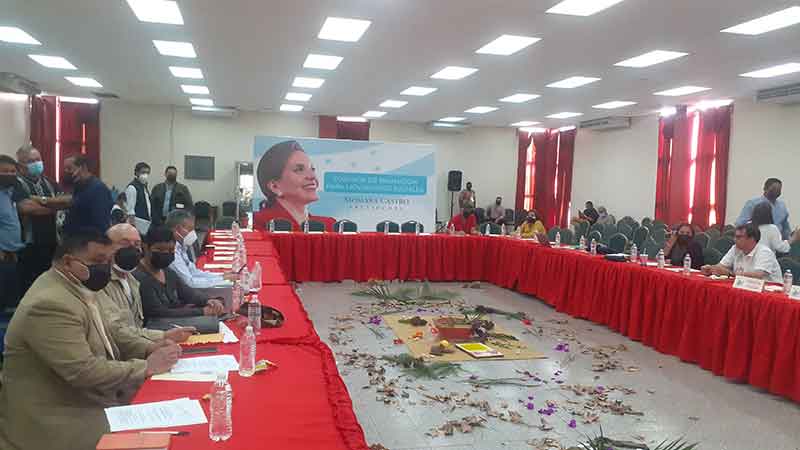
A photo from the follow-up meeting in Tegucigalpa, Honduras on Friday, January 7, 2022, at Universidad Pedagógica Nacional Francisco Morazán (UPNFM), in preparation to submit the Yoro Biological Corridor package directly to the newly elected government.
Interesting Facts
Honduras is the only Central American country with a law to establish legally protected Corridors. This is a progressive development in dealing with biodiversity and climate change!
Honduras is the second Central American country to elect a female President.
The Corridor process is expensive and complicated and Yoro Biological Corridor™ is the most advanced Corridor program in Honduras.
MDI is currently co-managing two national parks bordering the Corridor.
The process of legally establishing the Corridor and co-managing the parks is providing the opportunity for Honduran students to study and obtain advanced degrees in the US.
The research coalition will model the impact of Cafe Solar®’s clean technology and forest-restoring coffee cultivation on watersheds, forest, and livelihoods in order to guide its scale-up. The National Science Foundation (NSF) is funding the Cafe Solar® program to the tune of $3.4 million.
“The resulting system produces high-quality coffee, restores and conserves high-elevation forest critical to healthy watersheds, biodiversity (including migratory birds), while enhancing employment and revenues critical for community stability,” says Richard Trubey, director of program development at Mesoamerican Development Institute (MDI).
“This funding couldn’t come at a more needed time, as coffee is driving deforestation and threatening national parks, and the business as usual approach combined with the pandemic is causing many coffee farmers and skilled local youth to seek alternative sources of income and even risk emigrating to the United States,” Richard adds, “We need these farmers and talented young women and men, just as much as a development program of this nature needs major upfront financial investment to move it forward until the model becomes self-sustaining.”
The money will allow MDI to continue funding local researchers, and to further develop the higher education of the Honduran researchers. The research will aid the production of Cafe Solar® coffee, in an effort to help satisfy the global need for low carbon (and net zero) coffee supply chains.
Scientists Cooperating to Address Climate Change via Coffee
This NSF Growing Convergence Research Project brings together conservation biologists, ecologists, agronomists, farmers, indigenous peoples, economists, social scientists, land managers, and engineers to co-design and implement a system for sustainable coffee production.
The $3.4 million project includes Tulane University; the University of Massachusetts, Amherst; University of North Carolina; and Indiana University of Pennsylvania.
Convergence research is a means of solving vexing research problems, in particular, complex problems focusing on societal needs. It entails integrating knowledge, methods, and expertise from different disciplines and forming novel frameworks to catalyze scientific discovery and innovation.
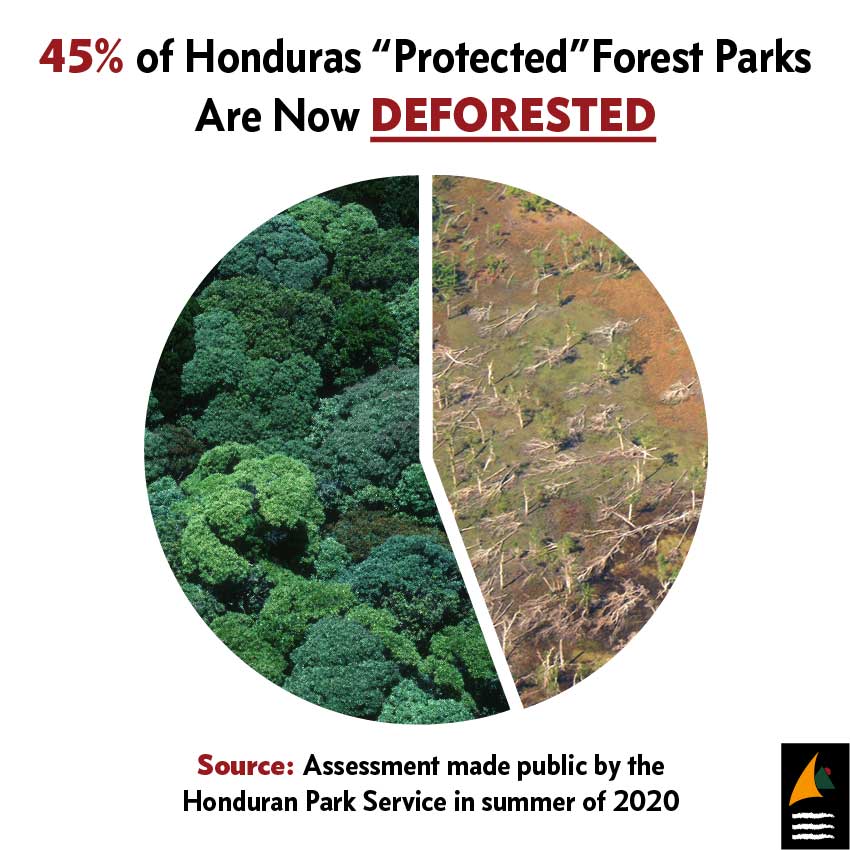
The following Yoro Biological Corridor Meeting Report marks a significant point in the Corridor’s development, as there is a recognized crisis (45% of protected Honduran Forest Parks have been deforested in the last 10 years) and it has become critical to find a more efficient means for stakeholder engagement (i.e. conference call meetings at a distance).
The Yoro Biological Corridor is is an effort to link eight Honduran national parks threatened by conventional coffee production. The legal establishment of the corridor by the Government of Honduras will seek to promote and build on the forest protection and restoration efforts of the park co-Managers, including our Cafe Solar® team.
Meeting Details
Who: MDI + DIBIO (Directorate of Biodiversity) + MGC presenting to 32 mayors/municipal districts What: High Level Multisectoral Stakeholder Engagement Meeting Why: To achieve legal establishment of the Yoro Biological Corridor (which has an area spanning 32 municipalities) Where: Online on GoToMeeting platform When: Wednesday, December 9, 2020 @ 12:00pm EST
Meeting Summary
The plan: To provide a unified presentation to the 32 Mayors of the Yoro Biological Corridor for the first time via online meeting platform. The main purpose: To advance the process for the legal establishment of the Yoro Biological Corridor.
Presentations were given by: Richard Trubey (MDI), Raúl Raudales (MDI), Kelly Diaz (MDI), Rene Soto (DIBIO), Martin Murillo (MDI), Fabiola Rodriguez (MDI). Not all mayors were able to connect; however, this new online format will now be used as a model for education and cooperation at a distance, and the meeting recording will be quickly disseminated to all those who could not connect.
What Made This Meeting Significant?
A forest corridor involves and affects so many people/stakeholders that finding ways of connecting them efficiently has historically presented a major multi-sectoral challenge. Now that meeting online is more widely accepted, we are using an online meeting platform to expand and accelerate the reach. These presentations are being recorded and will be posted to the Mesoamerican Development Institute (MDI) website for more efficient stakeholder engagement.
This Stakeholder Engagement process has been active for four years and started with a handful of participants (more than 150 presentations to date). This new online conference format is necessary in order to efficiently address the urgent need for the legal creation of the Yoro Biological Corridor. The initiative is spearheaded by MDI Honduras S. de R.L. and its Off-Grid Carbon Neutral Facility—which is scheduled to be operational for the 2021/2023 harvest. The new facility will be the value generating hub for the Yoro Biological Corridor. Currently MDI is exporting Cafe Solar® from the pilot facility operating in the town of Subirana, Yoro for the last 8 years.
First climate change and now COVID-19; We deal with these crises and coffee farmers do too. Our job as coffee merchants is to tell the story of the grower, and this brief account of the life of a coffee farmer in Honduras is straight from the source …
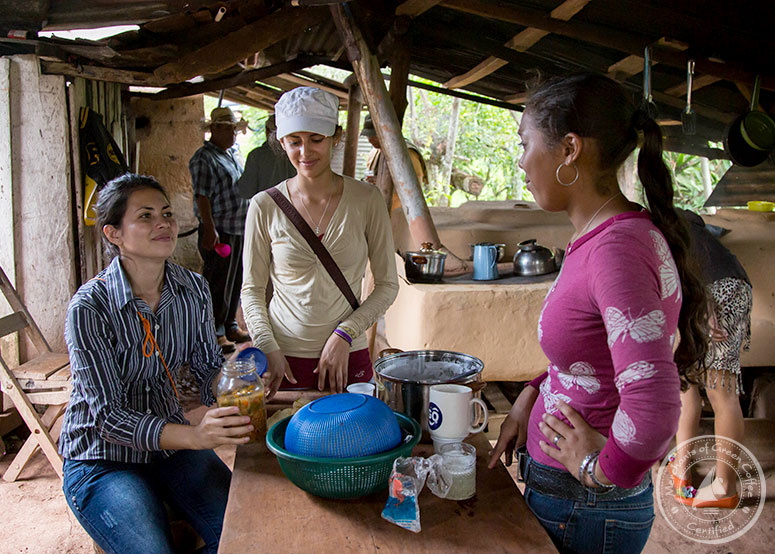
Born in a small village called ‘Subirana’ in the Yoro region of Honduras, fifth generation producer; Cindy Dubon, was raised into an established family tradition of coffee farming for subsistence. Cindy is now 32-years-old, a beautiful mother with three young children, and probably one of the youngest cooperative managers in the region. You could say that she is doing comparatively well; as a producer, a professional, and an active contributor in her community.
To communicate with the outside world, she uses her personal cell phone as well as the cooperative’s office computer, and she was more than happy to help paint this picture of what daily life is like for the people who make our cups of coffee possible.
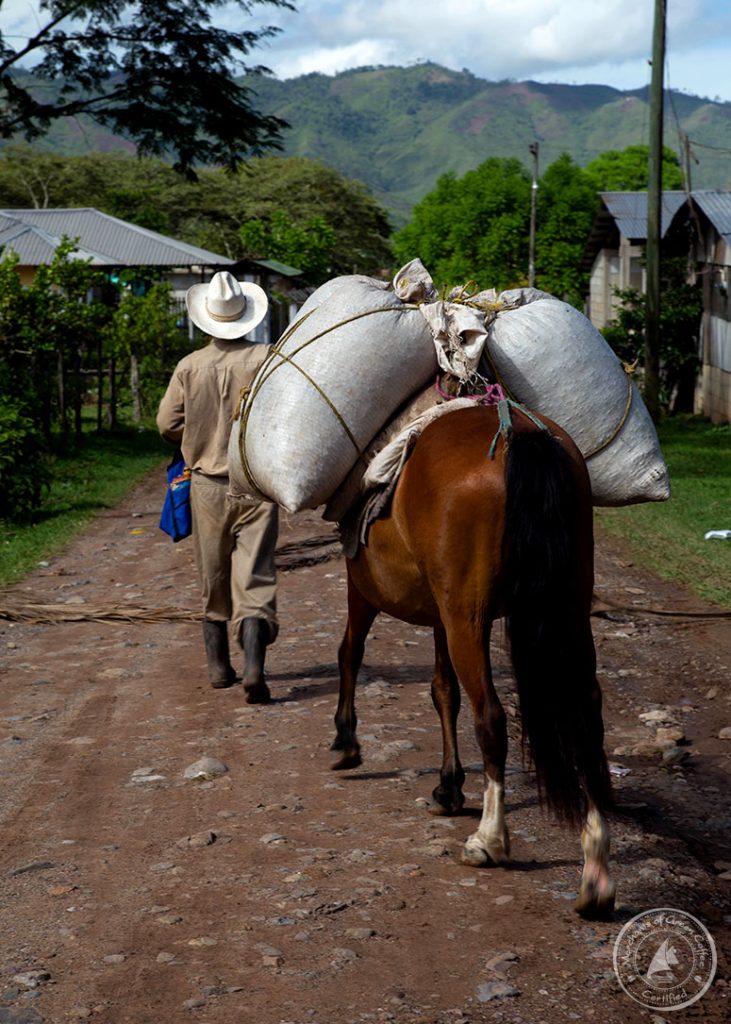
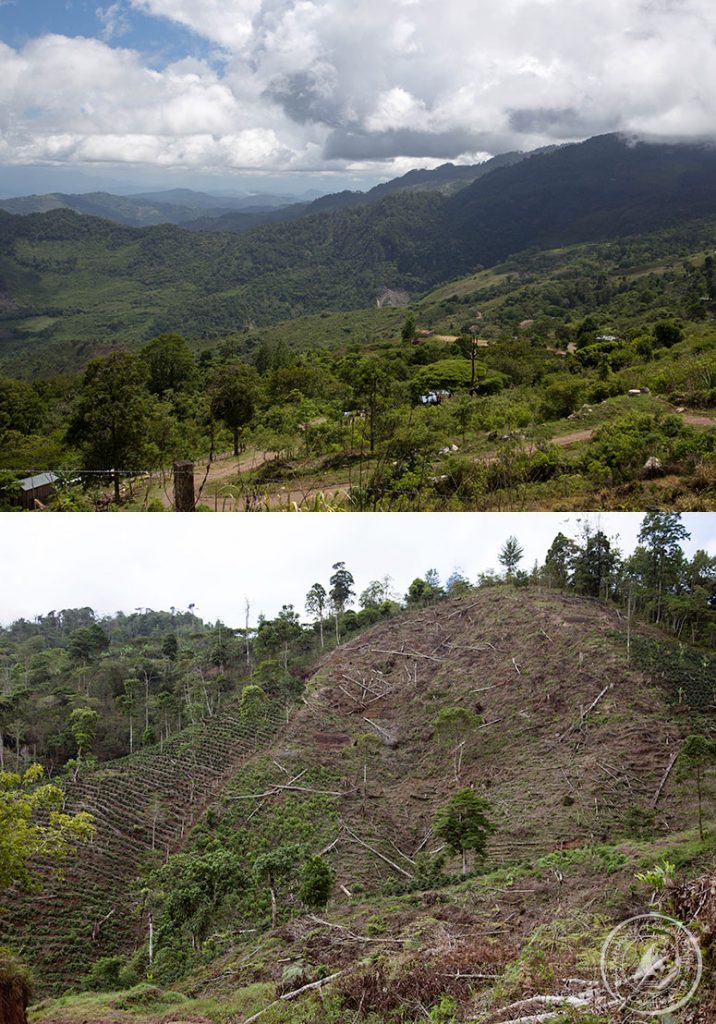
This image shows a classic example of a coffee farmer transporting his wet beans down the mountain by horse to the processing facility. The farms are mostly located at higher elevations and the coffee is brought down the various mountains to be collected at the processing facility.This part of the Yoro region is naturally beautiful and characterized by large swathes of cloud forests dotted by small agricultural communities; but evidence of deforestation is everywhere and communities are at risk of losing the natural conditions from which their livelihoods depend.
The Daily Routine
Morning or “Mañana”
Aside from the constant jungle hum of insects and amphibians, not a sound is heard. Not even a rooster pierces the chilly silence, and yet Cindy and the other women of her family; her sister and mother, rise to make breakfast. It’s 3:30am and the food must be ready by 4:30am; at which time the entire family, now including Cindy’s dad and brother, all sit down together to eat.
On the menu: rice and beans, and of course … coffee. This is breakfast every day. If it can be afforded, there may be a side of banana. After all, Honduras is the original Banana Republic and both bananas and coffee have become staples of life for Hondurans. They drink the same coffee they grow, but only the lower quality stuff. Making ends meet always involves sacrifice, and they’ve been reserving the best beans for export for as long as anyone can remember.
Work on the farm starts promptly at 5:00am in order to take advantage of the maximum amount of daylight hours. Cindy makes note that the air temperature can be quite cold at this time (17°C) and the homes lack fully enclosed walls so, contrary to what most people may think, part of the morning routine involves everyone layering on as many clothes as possible to stay warm. If it happens to be raining, they’ll be lucky if there are enough garbage bags to go around. Ensuring they have suitable PPE masks and/or mask material during the COVID-19 outbreak isn’t even a thought. “Not possible” says Cindy, “social distancing is our best and only option in most cases.”
Family farms provide relative safety and security for Hondurans. Alternative forms of employment are few and many young people end up leaving their villages to search for work in the main cities where crime and dangerous jobs are more common. (Left to Right: Cindy, Tatiana, and Orbeli)
Afternoon or “Tarde”
Women of the household spend most of the day cleaning, planning, cooking, picking fruit, and taking care of any small children. In her case, halfway through the day Cindy and her female family-members meet the men in the farm with a lunch of fresh fruit and more (you guessed it!) … rice and beans. Meat is rarely consumed because it’s difficult to get and it’s too expensive for them to raise animals.
The sun is blazing hot by now (it’s well above 30°C), but an air of coolness permeates from being at such a high elevation (+1000m above sea level). After filling their stomaches, the women return to the housework and the men continue working outside in the farm until the sun goes down.
“Especially during the harvest season”, Cindy says. “During harvest, the pickers often work until 6pm (13-hour days) and sometimes electric lights are even used to pick at nighttime”. The pressure is real: They must pick quickly or risk the ripe fruit falling from the tree and spoiling. And the work doesn’t end there. The collected fruit needs to be de-pulped (cherry removed from the seeds) as soon as possible after picking to avoid spoilage. All family members (including children) are needed on the farm at this time, and hired hands (i.e. seasonal workers) from surrounding towns and communities are often temporarily employed.
When COVID-19 struck there was a shortage of labour in the region, explains Cindy, and some producers lost part of their harvest because the fruit fell from the tree. “Many were also late in their post-harvest planning and fertilizing,” she says.
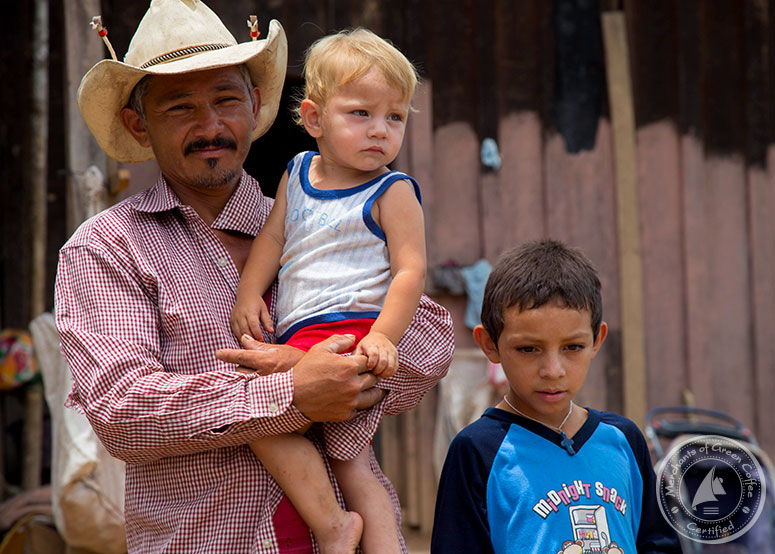
A coffee growing family living below the poverty line lit up in smiles and opened their doors to share everything they had with us visitors. For many producers here, the opportunity to see and engage with a ‘foreigner’ may only happen once in a lifetime.
Evening or “Noche”
By the end of the work day, which is usually around 5pm, it’s time for dinner. “La Cena”. A typical plate of beans, “these can never be missing from the plate”, says Cindy; plus eggs from their own hens; butter and/or cheese; and, finally, bananas picked from their own farm. This is the typical dinner and it’s proven to be both delicious and sustaining. Once or twice a year a family might find themselves enjoying a meal of Honduran-style “pupusas” (grilled corn bread stuffed with beans, cheese and salsa) at the one and only local restaurant in the village.
Parents wash up and settle in quickly after eating since the sun sets between 5:30pm-6:15pm depending on the season. There are no streetlights in Subirana and not every home has electricity, so children can be found outside playing soccer near the patios until sundown; all the while keeping an eye on any drying coffee. The absence of sun gives way to complete darkness and the hum of insects grows louder as the nighttime jungle comes alive.
Here and there, a glow of electric light can be seen through the open walls of cement homes. “Sometimes parents will spend the evenings telling stories of their ancestors, and other times they just relax and watch soap operas until going to bed between 8pm-9pm”, says Cindy. “In the parent’s case, they have to get up early to work; and the children usually have to wake up early to embark on a long walk to school.”
Annual Schedule
Coffee is grown in tropical regions close to the equator, in what is known as the coffee “bean belt”. Each growing region’s season is slightly different in timing, depending on the general habitat and variations in climactic conditions, such as temperature and rainfall. Nevertheless, the season, and therefore the “routine”, involved in coffee production has many similarities across the world.
Planned calendars are created month-to-month, Cindy explains, in which her family maps out the weekly intervals of tasks; like fertilizing, pruning, cleaning, sprouting new seedlings, and so on. Each farm is an average of three hectares in size (about 2.4 acres), and farmers have to be very careful about how they plan maintenance so as not to harm any trees.
Many growers are responsible for finding a buyer for their own coffee, so market instability is a major concern. During COVID-19 the world’s attention was necessarily occupied and it forced individuals’ attention inwards. This only worked to intensify concerns of market instability for coffee producers.
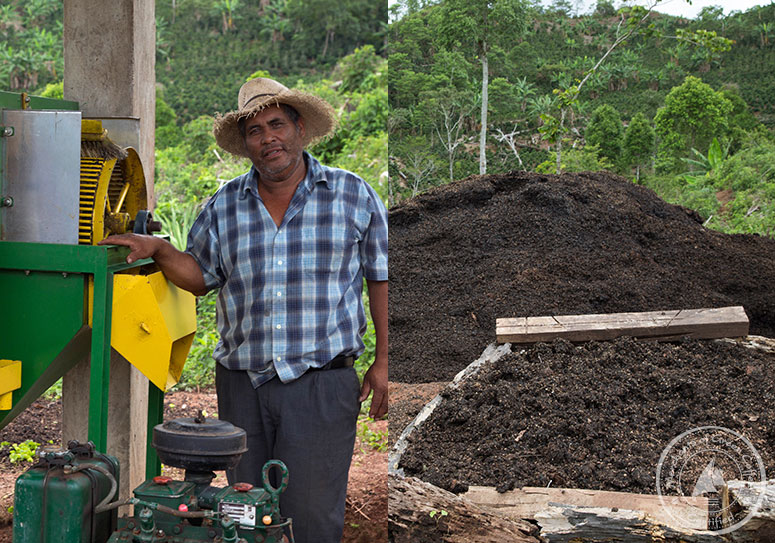
In the case of Cindy’s cooperative, a central depulping machine (used for removing the cherry from the seeds) is an important part of their coffee supply chain and is shared by the community. The machine is powered by biofuel, which is grown quickly and cheaply in the region; an in addition to processing the coffee this machine provides a source of organic fertilizer for the coffee trees in the form of compost.
April-July
April signals the start of the growing season for Cindy’s coffee from Honduras. As the trees prepare for new growth, producers spend their time cleaning and maintaining the farm after the big harvest.
This includes brush cleaning the trees; removing old and broken branches; applying organic fertilizer; removing foliage so the tree has more strength when developing fruit; and making seedbeds for future coffee farms.
August-September
Beginning in August and continuing to September, the coffee plants go into bloom producing a plethora of delicate, white flowers. The air is filled with the scent of jasmine, and birds and insects can be found hard at work pollinating.
Farmers take this time to rest and prepare for the harvest season. It’s not all rest, though. This is the time when the trees are actively getting ready to bear the next four months’ worth of fruit harvest and finding a buyer for the coffee becomes critical in these months. As the trees fill with flowers, producers are working to estimate the size of their harvest and cooperate with their neighbours to seek and secure a buyer at a decent price.
Late September-March
This is the coffee fruiting season and by far the busiest season in Subirana. Flowers yield to berries (called “coffee cherries”) that turn from green, to yellow, to red, indicating peak ripeness. But this ripening process doesn’t happen all at once. Fruiting, and thus harvesting, begins in September and continues steadily all the way through to March.
The intensive tasks of both picking each and every ripe cherry by hand, and the multiple stages of processing needed throughout these four months requires a sudden mass amount of labour. Social distancing during harvesting has proven to be more difficult for producers, most of whom cannot afford to take time off for quarantine. Coffee is their livelihood and it needs to come off the trees and be sold.
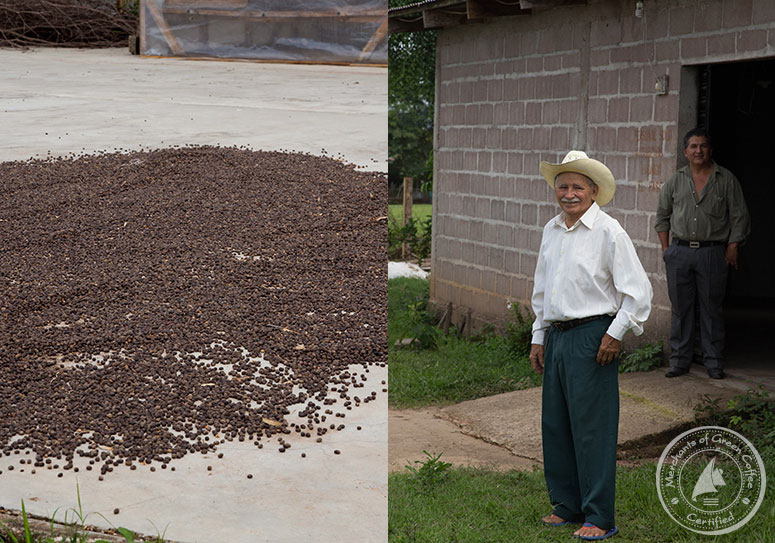
This image shows a traditional method for processing (drying) the coffee, found in Honduras and used throughout Central America. This method (referred to as “sun dried coffee”) is environmentally-friendly; however, it’s also very labour intensive, requiring two weeks of manual raking, plus the drying tends to be less even due to sporadic rainfall and general humidity.Mechanical processing machines powered by solar energy are a unique and modern innovation (called “solar dried coffee”), first employed by Cindy’s cooperative in this region. This off-grid, commercial-scale technology has a number of benefits over patio raking; mainly uniform drying within a much shorter time-frame using clean energy. The facility also provides employment for the region; including jobs in coffee sorting, bagging, quality control and grading.
Coffee Farming in Today’s Context
The Bad News
Climate change and COVID-19 have made coffee farming more risky due to market instability and this is affecting all coffee farmers across the world. Extreme weather events (i.e. droughts, prolonged rainy seasons, hurricanes, etc.) and longer-term habitat changes (i.e. riverbeds drying up, species biodiversity loss, etc.) due to climate change also threaten coffee farmers livelihoods.
The Upside
Both climate change and COVID-19 are revealing how important it is for the world to work together; which means they are providing even more reason for consumers to think about and establish a deeper connection with the people who grow their coffee.
The q-grading of coffee is a process that consumers don’t typically get access to and Cafe Solar® is not your average coffee. It’s the first solar dried coffee (processed using renewable solar energy). It’s also a supply of green coffee that’s built to mitigate climate change and its q-grading process (which is the confirmation of any coffee’s quality) represents an important aspect of this specialty coffee’s unique, transparent supply chain.
Q-grading this year’s (2019/2020) harvest of Cafe Solar, is Karen Jull, accredited Merchants Q-grader and Grocery Brand Manager for Cafe Solar coffee.
Karen’s extensive background in food product development combined with her past experience cupping and grading various solar dried coffee harvests over the years qualify her in providing a valuable sensory perspective on the development of this solar dried coffee. See our “Corporate Documents” page to download a copy of Karen’s q-grade results, in which she scored the coffee an 82.75.
A completely impartial at-source Q-grading of this coffee was also completed by ICAFE (the official Honduran coffee marketing board) prior to it being shipped from Honduras (in which the coffee scored a 85.09).
What’s the point of a Q-grading?
This grading is a systematic analysis of the producer’s hard work and applies a credible grading to the coffee.
How does this coffee compare/contrast with other coffees out there?
Scores above 80 signify “specialty” coffee and these coffees are considered to be in the top tier of world coffee quality. Individual scores depend on the subtle characteristics of each origin and the subjective experience of the cupper.
About Cafe Solar: Green Coffee Mitigating Climate Change
Cafe Solar is a green coffee and a first-of-its-kind solar dried coffee, which refers to its processing method. These green beans are fully washed, and then dried using 100% renewable energy supplied by advanced solar energy technology. This solar powered processing equipment stops the deforestation currently fueling wood-powered coffee processors … 16,000 acres of forest are currently lost each year as a cheap fuel source for conventional coffee processing!
This coffee is also grown using a restorative system of agriculture, which encourages growers to allow forest to regenerate on their lands. It’s coffee farming with a built-in reforestation program and it’s called Integrated Open Canopy™.
By stopping the current deforestation caused by coffee’s processing and growing additional forests, Cafe Solar coffee is not just sustainable coffee to produce … it’s a restorative coffee!
Our First Sampling of this Coffee
As soon as it arrives we break open a bag with great anticipation and try it.
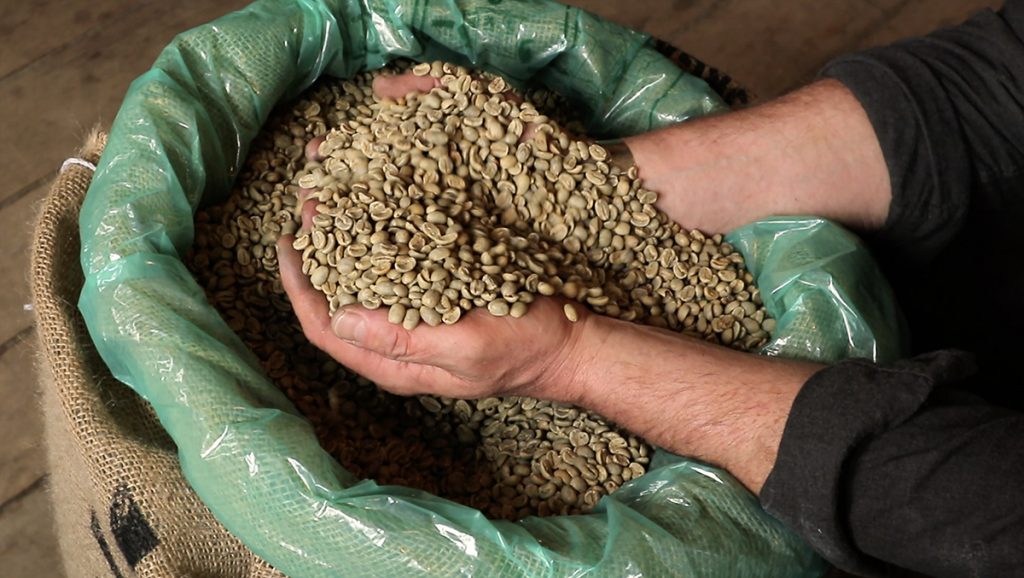
Breaking into the first burlap bag from the 2019/2020 harvest of Cafe Solar®. The green beans smell amazing and it’s a beautifully uniform example of quality, solar dried coffee.
Our Very First Tasting Notes
Roast Degree: 6/10 Acidity: 4/10 Body: 7-8/10 Complexity: Dark chocolate, lemon acidity, light grassy end notes, nice creamy body, no dry flavour, earthy, hints of fermented cassava, hazelnut, toasted coconut.
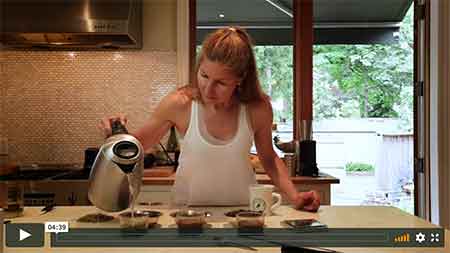
Then we commit to drinking this coffee at various roast degrees on a weekly basis throughout the year until the next harvest, taking notes all along the way. It takes time to truly familiarize oneself with a coffee, as nuances present themselves depending on a wide variety of factors; including the setting, the brew method, the brewer, the freshness of the roast, etc.
Our first-ever “commercial” to help promote our flagship restorative coffees: Cafe Solar green coffee & affiliated roasted blend; Climate Change Coffee. Co-produced in 2016 by Scott Lalonde, Customer & Media Collaborator and Meagan Thibeault, Director of Communications, this video is meant to capture the feeling of waking up happy to better cups; i.e. better for both us and the planet.
Better Coffee Tastes Great … and Mitigates Climate Change!
Better coffee is here addressing better taste and climate change mitigation. Cafe Solar® and Climate Change Coffee are the only coffees addressing climate change in a transparent and measurable way.
Defining Cafe Solar & Climate Change Coffee
Cafe Solar: Our flagship green coffee that’s mitigating climate change … it’s the product of a restorative program that combines organic farming, 100% off-grid solar-powered processing, and forest restoration.
Climate Change Coffee: Our flagship roasted blend that’s addressing climate change … It’s the first roasted coffee blend to measure and offset the entire production of its blend ingredients, making it the first carbon-neutral roasted coffee blend! (The option to offset the footprint of its delivery to your door is also coming soon).
Coffee that is produced sustainably and is restoring forests in growing regions. Real sustainability isn’t just about stopping coffee’s negative impacts. That’s Step #1 (i.e. stopping the pesticide use, the burning of wood to process the green beans, the cutting of forests to harvest firewood, etc.). Step #2 in achieving real sustainability is to restore the natural resources that have been used up to this point (i.e. the forests that have already been cut down, the soils that have been depleted, etc.)
In short, “sustainability” isn’t enough anymore. At this point in time mitigating climate change and cooling the planet will require the restoration of the planet’s forests and other ecological systems, thus “restorative coffee” is truly sustainable coffee.
Why Restorative?
Because our coffee consumption has a huge footprint that has never been accounted for, and not many people are planning on giving up their habit!
… And because forest restoration alongside coffee farms is a solution! Rather than contribute to the carbon emissions, coffee can and needs to sequester carbon. In this way, consumers can feel good about their morning habit.
Wake Up!
These coffees are active in making a difference; restoring forests, measuring carbon sequestration, using off-grid solar-energy … and they are available for purchase today!
In this podcast Fabiola Rodriguez, doctoral student from Tulane University, talks about coffee growing and migratory birds in the context of her areas of study: ornithology, ecology, and conservation. She also compares types of coffee farms and how they affect bird habitat.
Fabiola has been researching bird populations in Integrated Open Canopy™ coffee farms for the past several years and is mentoring a team of five local biologists in coffee regions surrounding Pico Pijol National Park, Honduras, with over 100 study sites.
Migratory bird populations are on the decline and coffee farms can act as critical habitat for these threatened species. North American migratory birds call Canada and US forests “home” (their breading grounds) but fly all the way down to Central, South America and Caribbean tropical forests every year to spend the winter. Since the natural, annual life cycle of these birds spans two continents there is a need for suitable habitat in two very different parts of the world, and unfortunately habitat loss has been rising while bird populations have been declining.
“A staggering loss that suggests the very fabric of North America’s ecosystem is unraveling.”
—Cornell Lab director John Fitzpatrick and study coauthor Peter Marra
Writing for the New York Times, journalist Carl Zimmersums up nicely why we should view birds as our feathered friends: “Common bird species are vital to ecosystems, controlling pests, pollinating flowers, spreading seeds and regenerating forests. When these birds disappear, their former habitats often are not the same”.
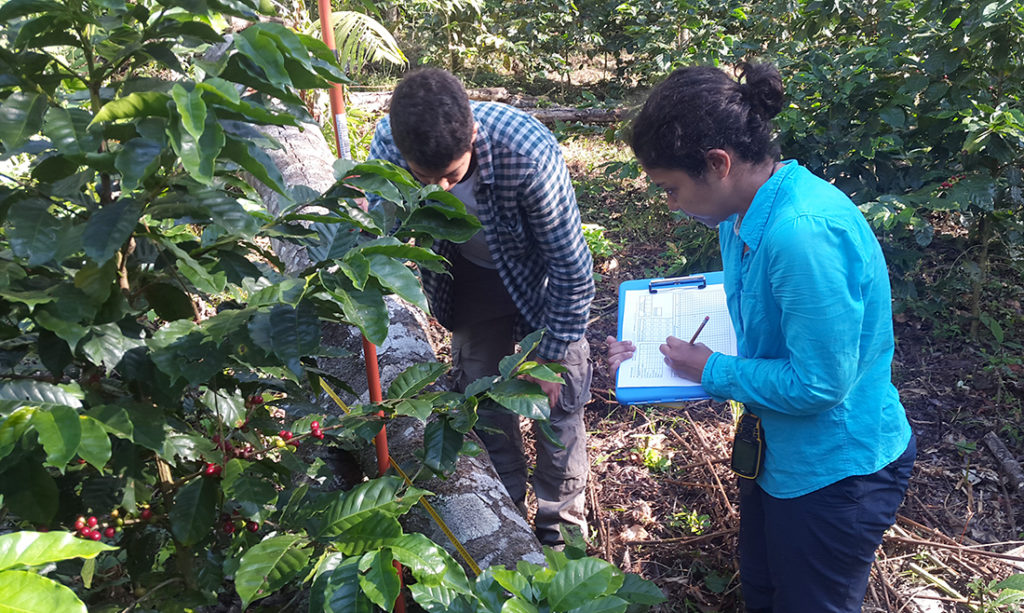
Fabiola Rodriguez in the field studying birds on coffee farms in Honduras.
As far as coffee and birds are concerned, the connection has to do with the birds being able to select the best habitat for survival over winter, in order to make it back home in spring. The best option is obviously natural forests, but as the forests evolve into what she describes as “working landscapes” (that need to sustain people), new wintering habitats may include cattle farms (which have little to no trees); deforested areas (due to lumber, mining, etc.); and certain agricultural farms, like coffee farms (which are more ideal as a softer transition for the birds than cattle, for example).
The question Fabiola poses is, “Can these working landscapes sustain these species?” … And the answer is, yes! Bird-friendly coffee can offer a solution.
Q. Are there types of coffee farms that tend to be better at sustaining migratory bird populations than others?
A. Yes. The three types of coffee farms Fabiola sees and works with:
Sun coffee farms. These types of farms have only coffee trees (which are lower-to-the-ground shrubs). This monoculture coffee farm has a harsh, hot environment that supports the least number of migratory birds.
Shade coffee farms. These types of farms spare (or “leave in tact”) some trees and forest amoungst the coffee trees; however she mentions that shade is by no means a closed canopy and that it varies from a handful of trees here and there to a bit more shaded in some areas. It’s never a thick canopy because the coffee trees need some sunlight, and from her research she finds percentages of shade cover to be extremely variable; however, shade coffee farms support more bird species than sun coffee farms.
Integrated Open Canopy™ (IOC) farms. These types of farms are defined by “land-sparing”. Fabiola: “Imagine a coffee farm, which can have sun or some shade, and then right next to it a patch of forest that is equal in size. This is a method that has been recognized in the conservation literature as land-sparing, but in terms of coffee it also has another term … in Honduras, we know it as Integrated Open Canopy™ (IOC). The idea is that when you have many of these types of land-sparing farms you actually connect the landscape with trees and forests. It’s a method of production that was introduced by the Mesoamerican Development Institute (MDI), which is an NGO I collaborate with when I’m in Honduras. They’re trying to make this form of production sustainable because it is conserving forest and forest at the end of the day is the natural habitat; so if you were to have this idea expand in the landscape it would have a very positive effect. And it’s especially positive because in Costa Rica where they’ve also studied these IOC farms, some of my collaborators found they had a higher species richness of forest dependent migratory birds than shade coffee farms.” So in conclusion, IOC farms are proven to support the greatest numbers and diversity of forest-dependent birds species.
Fabiola goes on to explain that collaborative researchers are also discovering that IOC coffee farms are having similar positive effects on, not just migratory birds, but other animal and insect species; in addition to significantly improving water and soil quality in the region. In the second half of the podcast: Fabiola talks about coffee farming, monocultures vs. biodiversity, coffee processing, and, another important issue, the fact that coffee processing is fulled by burning forest wood. “Approximately 6,500 hectares of forest in Central America are lost, not from planting coffee, but from drying coffee.”
Fabiola Rodriguez is a doctoral student from Tulane University researching bird populations in Integrated Open Canopy™ coffee farms for the past several years. She is from Tegucigalpa, Honduras and is mentoring a team of five local biologists in coffee regions surrounding Pico Pijol National Park, with over 100 study sites. This makes her a Mesoamerican Development Institute (MDI) research collaborator.
Fabiola studied biology in Honduras and fell in love with observing ecosystem interactions, eventually focusing her study on ornithology. She first became a field technician, and eventually wanted to design the research and ask questions that contribute to both science and conservation, which is why she went on to complete her doctorate degree.